Well, in Nigeria, you can marry more than one wife, but not in the US.
All 50 states outlaws bigamy and holding multiple marriage licenses. But
following last week's U.S. Supreme Court decision legalizing gay
marriage, a Montana man said yesterday that he will apply for a marriage
license so that he can legally wed his second wife.
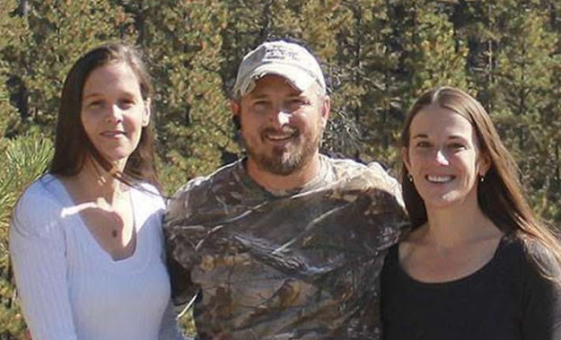
Nathan Collier and his wives Victoria and Christine applied at the
Yellowstone County Courthouse in Billings on Tuesday in an attempt to
legitimize their polygamous marriage. Collier said he plans to sue if
the application is denied.
"It's about marriage equality," Collier told The Associated Press Wednesday. "You can't have this without polygamy."
County clerk officials initially denied Collier's application, then said
they would consult with the county attorney's office before giving him a
final answer, Collier said.
Yellowstone County chief civil litigator Kevin Gillen said he is
reviewing Montana's bigamy laws and expected to send a formal response
to Collier by next week.
"I think he deserves an answer," Gillen said, but added his review is
finding that "the law simply doesn't provide for that yet."
The Supreme Court's ruling on Friday made gay marriages legal
nationwide. Chief Justice John Roberts said in his dissent that people
in polygamous relationships could make the same legal argument that not
having the opportunity to marry disrespects and subordinates them.
Collier, 46, said that dissent inspired him. He owns a refrigeration
business in Billings and married Victoria, 40, in 2000. He and his
second wife, Christine, had a religious wedding ceremony in 2007 but did
not sign a marriage license to avoid bigamy charges, he said.
Collier said he is a former Mormon who was excommunicated for polygamy
and now belongs to no religious organization. He said he and his wives
hid their relationship for years, but became tired of hiding and went
public by appearing on the reality cable television show "Sister Wives."
The three have seven children of their own and from previous relationships.
"My second wife Christine, who I'm not legally married to, she's put up
with my crap for a lot of years. She deserves legitimacy," he said.
Collier said he sent an email asking the ACLU of Montana to represent
him in a possible lawsuit. ACLU legal director Jim Taylor said he has
not seen the request.
Taylor said he has no opinion on Collier's claims, though the Supreme
Court decision on gay marriage "is about something very different."
Anne Wilde, a co-founder of the polygamy advocacy organization Principle
Voices located in Utah, said Collier's application is the first she's
heard of in the nation, and that most polygamous families in Utah are
not seeking the right to have multiple marriage licenses.
"Ninety percent or more of the fundamentalist Mormons don't want it legalized, they want it decriminalized," Wilde said.
A federal judge struck down parts of Utah's anti-polygamy law two years
ago, saying the law violated religious freedom by prohibiting
cohabitation. Bigamy is still illegal.
The state has appealed the ruling, and the case is pending in the 10th U.S. Circuit Court of Appeals.
Wilde said most polygamous families are satisfied with the judge's
ruling and believe taking it further to include multiple marriage
licenses would bring them under the unwanted jurisdiction of the
government.
But she said the Supreme Court's decision on gay marriage should strengthen their chance of winning the appeal.
"We hope the Supreme Court decision will show the direction the nation
is going," she said. "It's more liberal, it's more understanding about
people forming the families the way they want."